


The first time I saw Alexei Ratmansky’s “Solitude,” shortly after its February 2024 debut, I cried from the first movement. Very frequently do I find myself moved by beautiful things, but I find myself more frequently letting a tear fall at the last image of a piece—sometimes I choke up just thinking of the final scene of American Ballet Theatre’s Kevin McKenzie production of Swan Lake. Much rarer do I encounter a work that guts me so much that I watch the greater part of it with damp cheeks.
“Solitude” is one of several Ratmansky ballets that he choreographed in response to—and continued anguish regarding—the Russia-Ukraine War. Ratmansky, a onetime artistic director of the Bolshoi, came to the U.S. in 2008, where he found a home at ABT and then New York City Ballet. His parents and many close family members remain in Ukraine; he is staunchly anti-Putin, so much so that the Bolshoi is illegally performing his works without credit or royalties. That war continues, and so too does Ratmansky’s artistic activism. But recently, he has a new target: Trump.
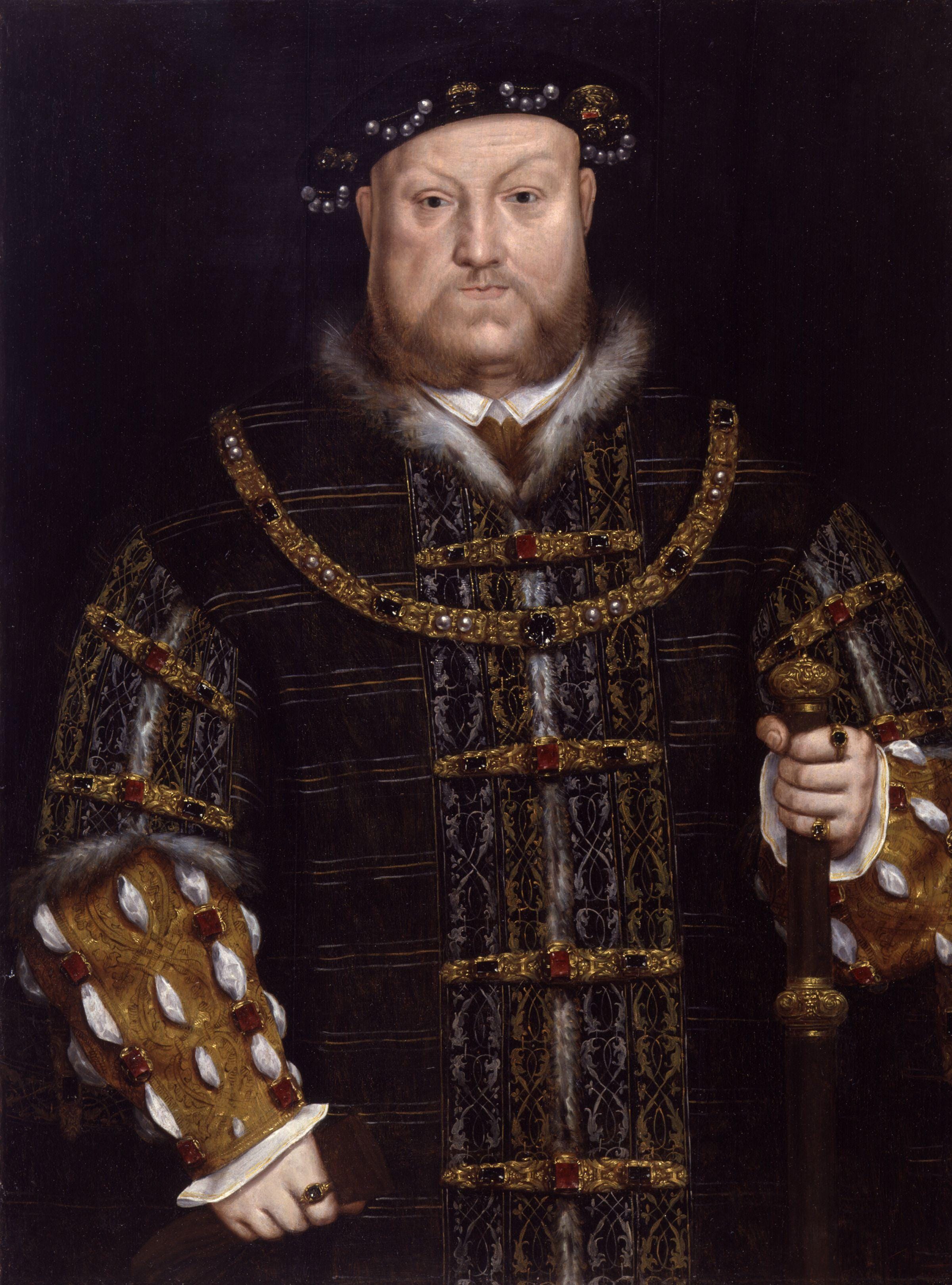
With nearly two decades spent living in the U.S., of course the celebrated choreographer, 57, would have plenty of thoughts about our political reality. His latest ballet—the 500th in New York City Ballet’s repertoire—is his most directly focused on this country. “The Naked King,” a one-act narrative ballet, is equally inspired by anti-Trump “No Kings” rallies and the opera that provides its score, Jean Françaix’s “The Emperor’s New Clothes Suite” (based on the Hans Christian Andersen tale of the same name).
The plot goes like this: a group of three swindlers offer a vain king clothing that is magnificent and “invisible to those who are either incompetent or stupid.” The king’s entourage, not wanting to appear so, encourage the king to accept them. This is how the king ends up naked, with everyone around him ignoring that reality until a young boy (a student from the School of American Ballet) blurts out: “The king is naked!”
It’s a ballet rich in physical comedy. The king (played on different nights by Andrew Veyette and Craig Salstein) is King George-esque, precious yet bumbling in his movements. He wears a fat suit. He is ignorant of the fact that his sunglasses-wearing queen is having an affair with one of his entourage right under his nose. He is, ultimately, a clown.
Does this make for an effective ballet? I’m not entirely sure. The king dances, albeit comedically, and the three swindlers have the virtuosity of Romeo and his friends in Kenneth MacMillan’s production of Romeo and Juliet. They are cat-like, or at least, Cats-like. The queen (Miriam Miller and Emily Kikta) is all leg and pout. With her sunglasses, she brings to mind Yzma of The Emperor’s New Groove; perhaps a silly coincidence. The dancing is layered and lovely as Ratmansky’s work so often is, but it’s the story and its rather obvious humor that carry it through. A far cry from “Solitude.”
It was the favorite piece of my companion for the night (a non-ballet-goer), and I suspect, by the uproarious applause, that of many others in the theater. It was the final night of NYCB’s Art Series, and the promenade was stuffed, in particular, with young people after the show, enjoying beers, bourbon, and Absolute Tabasco Lemonade (surprisingly decent).
The Art Series is one of the best things that New York City does each year; with tickets priced at $54 for the whole theater, the best seats sell quickly, but still, the markdown presents a huge opportunity for those who don’t typically go to the theater. I went to each night of the series. The theater was filled each time. There were so many boyfriends in tow.
Of course, this is marketing, to a degree. Lower the barrier of entry to the ballet, sweeten the deal with free (undoubtedly sponsored) drinks after the show, and throw in a DJ. You would not believe the line for $18 wine during the first of two intermissions. Even with the price cuts to tickets, I am fairly confident the company netted more from each of these evenings than it will for its late-in-the-season programming of Balanchine’s “Diamonds” and Robbins’s “Dances at a Gathering.” With the more accessibly priced fourth tier not open for that program, I’m uncertain even I will attend.
But back to the actual show. “The Naked King” is ultimately not a ballet that is altogether inspired or refined in my view, though it may do something more important. With its fairly lowbrow comedy, outlandish costumes, easy-to-follow narrative structure, and overt, direct political commentary, Ratmasky proves something to the audience members who may not be as brushed up on their dance history as those who could reference the anti-war ballet “The Green Table” (1932) or even any of his anti-Putin pieces: that ballet is relevant and that it has something to say about the rapidly changing world around us, despite any assumptions one could make about its stuffiness or highfalutin nature. It is, after all, an art—and art must have the capability to react and reflect.
New York City Ballet isn’t done trying new things. In its current production of Sleeping Beauty, the role of Carabosse—the evil fairy—has been taken on by a male-identifying dancer for the first time, Gia Kourlas reported for the New York Times. It’s a caricature-driven, dramatic role, not that unlike the role of the witch in the classical ballet La Sylphide. Coincidentally, when I saw Bayerisches Staatsballett’s production of this work in Munich in November, that role, too, was played by a male-identifying dancer; the program included a meditation on gender and ballet when it comes to these kinds of parts.
Taylor Stanley, a principal dancer who uses he/they pronouns, first advocated for this part in 2023 (and was told no). So they went directly to Peter Martins, NYCB’s former director who choreographed the company’s version of Sleeping Beauty. Martins gave his blessing. This role has been played by men at other companies, the NYT notes.
I feel very fortunate that I’ll be seeing Stanley when I go to Sleeping Beauty on Wednesday (as well as Mira Nadon’s debut as Aurora). It seems like he’s put a lot of thought into his interpretation of the role. As a queer, nonbinary person of color, Stanley identifies with Carabosse’s experience on the outskirts of society; she’s not like every other fairy. They say:
I’m drawing from my own experiences and feelings of otherness, of being marginalized. It’s knowing that worth and making sure that that’s a constant now in my life over the way that I am perceived. That is also maybe what Carabosse is teaching me: that really no one else’s opinion matters except for mine because I know that my power is within me.
Merde to Stanley on their next two performances in this role!
Pretty cool: Opera Philadelphia—which you may recall has a wildly successful pay-what-you-wish ticketing program—earlier this month premiered the first opera by Michael R. Jackson, the playwright behind the Tony-winning A Strange Loop. Even more interesting: Complications in Sue, which is based on a story by Justin Vivian Bond (who also stars in the show), will feature music by 10 different composers. The opera is ambitious, telling the story of a woman’s whole life across 10 scenes. Fashion designer Jonathan Anderson, who seems to have more hours a day than anyone else, is behind the costumes, the New York Times reports.
Sacre bleu!!! The Louvre just can’t get a break. Last week, two longtime employees were both taken into police custody as they were suspected of being in a major ticketing fraud and then the museum also flooded, damaging the a ceiling painted by Charles Meynier in 1819. There was no structural damage to the ceiling, Le Monde reports.
As cities grow more and more expensive, how can artists manage to survive? Here’s one solution: Artists in San Francisco are donating the properties they purchased decades ago—in now-gentrified, far more pricy neighborhoods—to community land trusts that allow them to be sold way below market rate to other artists, the New York Times reports. Other organizations in the Bay Area are buying buildings vacated by tech companies and turning them into affordable work spaces for artists.
Artists, after all, have a huge impact on the economic performance and overall desirability of a city. But too often, they’re priced out of the neighborhoods they played a huge role in building. “We have to look at artists as economic contributors,” says Ken Ikeda, CEO of the Community Arts Stabilization Trust, “because it’s been an uphill battle for us to shift the cultural perspective around how arts add value to a city.” This trend, he adds, is also building in Denver, Minneapolis, Austin, and other places across the U.S.
