


Free send today. My birthday is next week—coincidentally, perhaps you’d like to become a paid subscriber?
I am never more of a cop than when I am sitting in the audience of a theater, and I see, to my great chagrin, the glow of a phone screen as a fellow patron continues texting, scrolling Instagram, checking the time, or—worst of all—taking photos of the performance as it goes. You will be hard-pressed to find a theater worldwide that allows such behavior, but nevertheless, these breeches of etiquette exist, and, I fear, they diminish the experience for everyone exposed to their occurrence.
We all know this argument (“phones bad,” etc.). It isn’t all that different from the stance people take when arguing against having phones out at a concert or a wedding—you, of course, should be fully present in the moment. But when I am watching a ballet, an opera, or a concert of classical music, I feel there is another layer to it. And that is the fact that, despite any interest or even love that you have for the art form on display, during an hours-long production, there may come a time when you find your mind wandering. Sitting with that feeling, and continuing to experience the performance in front of you, is kind of like training your brain to grow your attention span, rather than giving in to the impulse to switch to an activity that feels more active (taking a photo, looking at something else).
There is no shortage of studies that show that things like listening to classical music and watching a dance performance impact the brain and its response—sharpening focus and sometimes even improving memory in response to such stimuli. But this isn’t really what I’m talking about. The goal of art consumption is not a biological or cognitive advantage.
What I really mean is that sitting with art, even at times when you might feel pulled to disengage, gives you an opportunity to discover something new, which you might have missed had you not been paying attention; things that might not have made sense or connected on the first go-around suddenly click into place.
Last night, I went to my first show of New York City Ballet’s spring season and found myself drifting—despite my avowed love for this art form—during Alexei Ratmansky’s “Voices,” a 2020 piece that, I feel, tries to do so many things at once with the attempt of making some illegible point about feminism…maybe?…that it ends up saying nothing at all. The work is impenetrable to me.
But in enduring, you find something you have to say about even the things that you wish were over. You may recognize how much you like the agility of the choreography itself, but that it’s the discordant piano overlay that feels distracting. Or that the occasional tricks pulled by the male dancers draw you back in, even if you can’t quite place their role or purpose within the ballet. Sitting through something that you fail to connect with helps you to understand what it is that you like, and by better pinpointing the particular angles of what makes a work of art successful—in your own personal view—you start to develop that currently buzzy sensibility: Taste.
Taste ultimately is not about an outright rejection of “bad art” and “good art,” but the ability to discern for oneself, what you connect with and why. It’s an articulation far more than a judgment call, and it’s a skill set that you hone through exposure to a wide variety of stimuli. Paying attention is just the start. The reward is what you learn about yourself.
So put that phone away, please!
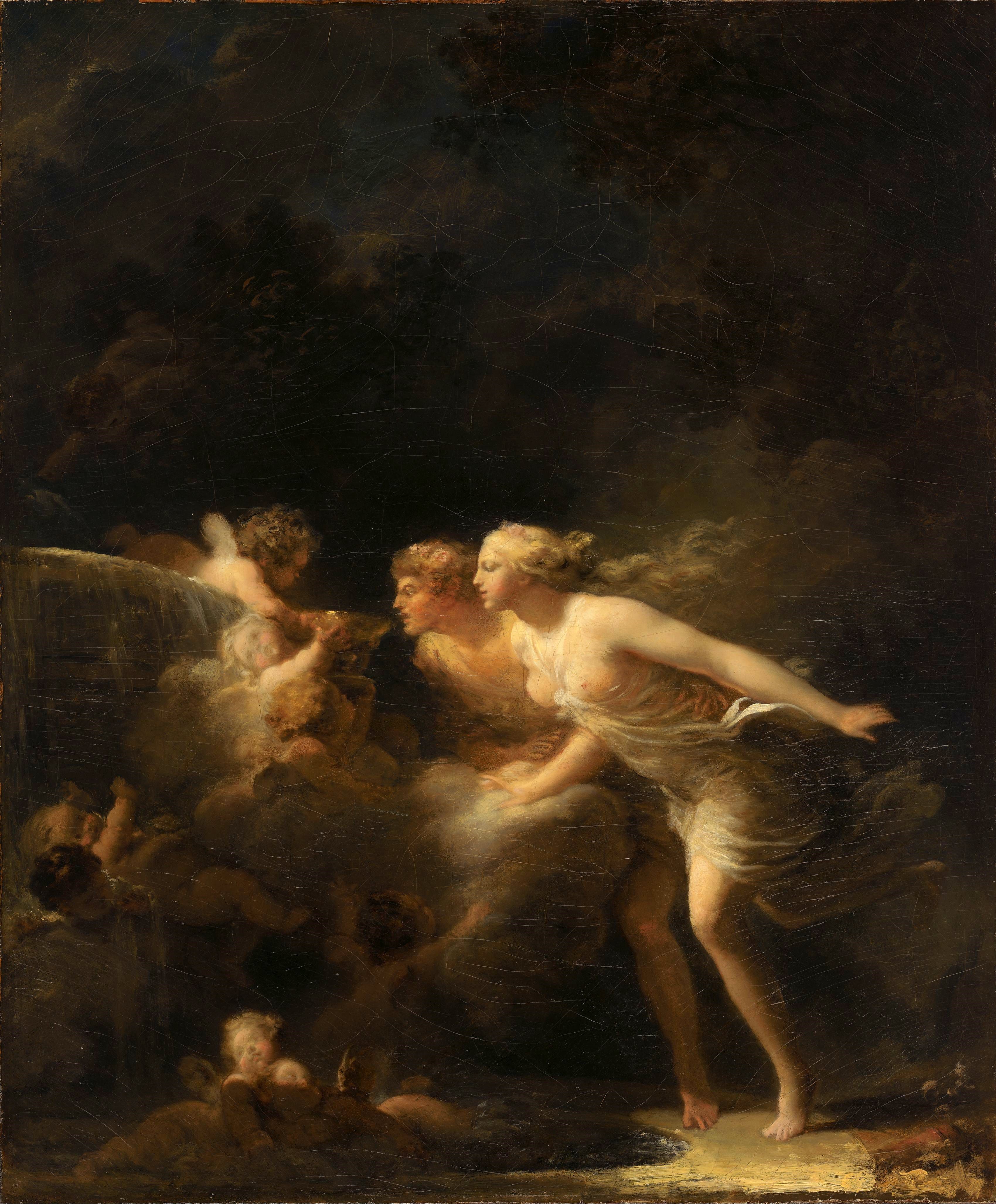
We could have seen this coming: the Metropolitan Opera’s $200 million deal with the kingdom of Saudi Arabia has fallen through, the New York Times reported. Met general manager Peter Gelb said that the Saudis blamed the dissolution of the deal on “damage to the country’s economy caused by the war in Iran and the blockading of oil passing through the Strait of Hormuz.” Gelb told the NYT that he is trying to make a similar deal with other countries, though he declined to specify which ones.
Given the many protests about this deal—and about where the Met is getting its money from, generally—I think it’s probably for the best that it just didn’t work out. But that also means that the Met still has to come up with cash somehow, lest it cull its production schedule even more than it already has; next season will feature 17 operas, while a decade ago it put on 25 per season.
Anyhow, the Met is still doing cool things. Consider its upcoming production of El Último Sueño de Frida y Diego, which opens in mid-May and corresponds with a companion exhibit at the MoMA, “The Last Dream: Frida and Diego,” which is on view through September 12 and was designed by Jon Bausor, the stage set designer and costume co-designer for the opera. More of this!
Also buzzy in the opera world is Luca Guadagnino’s decision to put on The Death of Klinghoffer, a controversial John Adams opera which first premiered in 1991, just a few years after its real-life events took place. The opera, which has an English libretto, is about the 1985 hijacking of the passenger ship Achille Lauro by the Palestinian Liberation front, and the murder of the wheelchair-bound, Jewish-American passenger Leon Klinghoffer. The opera has been subject to protests and accusations of promoting antisemitism, terrorism, and also of stereotyping Arabs.
Adams has denied these claims and defended the opera, pointing to the issue of freeform of speech. He has also previously stated that some critics seem not to take certain lines from the libretto in context: “There are some anti-Semitic slogans in the opera, but they are clearly flagged as coming out of the mouth of a particularly brutal hijacker. No one could view this and not identify those words as reflecting his deranged vision,” he said in 2014, after the Met canceled a broadcast of the opera due to protests.
Others defend the opera. The late Ruth Badger Ginsburg was reportedly in the audience of the opera on opening night and gave it a standing ovation. The writer Susan Schied told JSTOR in 2014, “I don’t see the opera as making a political statement, but rather undertaking a deep and nuanced exploration of human motivation and behavior.” NYT critic Joshua Barone has said that the opera is “virtually impossible to produce in the United States.”
Guadagnino brought it to Italy instead, at the Maggio Musicale Fioretino, where it just wrapped today. The Guardian gave it five stars. The Times called it a masterpiece.
The Dutch National Opera also just put on a complex work. Die Passagierin is a “forgotten 20th century masterwork,” told from the perspective of a German woman who served as a Nazi camp guard at the women’s barracks at Auschwitz. It’s the rare Holocaust story told from the perspective of a perpetrator, Forward reports, composed by Mieczysław Weinberg in 1968, though it did not premiere until 2006(!), 10 years after his death.
“Trying to make a perpetrator into someone you can comprehend also makes them human,” Laura Roling, the production dramaturg at the Dutch National Opera told Forward. “It defies very clear black-and-white, good-and-evil boundaries. If you can say perpetrators were inhuman, they were monsters, that’s it. But we know that in reality they were human beings, who also did the most inhuman things. So it’s important to ask: How could they live with themselves afterwards?”
Also of note are the great reviews of Innocence, the opera by the late Kaija Saariaho, which tells the story of the aftermath of a school shooting. Barone called it “an early contender for one of this century’s great operas.” I am seeing it on Wednesday and will report back.
If you’re like me, your feed has been full of design people in Italy for Salome del Mobile Milano, the world’s leading design fair. But next week attention will shift to Venice for the opening of “In Minor Keys,” the 61st International Art Exhibition of the Venice Biennale.
There has been much anticipation—or contention, more accurately—about the participation of Russia and Israel in the exhibition. While many protested that the countries be banned from the event (as the International Criminal Court has alleged war crimes against their leaders), the jury has made a decision that those countries will simply be ineligible for the exhibitions top prizes, because of the ongoing investigations by the ICC, ArtNet reported. While some artists and curators have similarly called for the United States to banned from the event, its participation is not impacted because it is not under investigation by the ICC (at the moment).
For many, this isn’t enough. The European Union, for one is protesting Russia’s participation by withdrawing €2 million in funding (impacting the 2028 edition) for the event. Belu-Simion Fainaru, who is representing Israel, called the decision by the jury an act of discrimination based on national origin.
Some big news out of Venice on the opera front: Beatrice Venezi, the much-contested music director of Teatro La Fenice (who has connections to Giorgia Meloni’s far-right government), has been terminated from “all future contracts” at the opera house, OperaWire reported. Following the news, the audience at the theater’s closing production of Lohengrin reportedly applauded.
Performance art is so back. Ai Wei Wei will reenact his 81-day detention by the Chinese Ministry of Public Service as a part of his exhibition, “Button Up!” at Aviva Studios in Manchester, England. The performance, “Sewing a Button,” will last 24 hours, in a recreation of the artist’s cell. Visitors can book both two-hour slots and 24-hour tickets for the performance, which starts on July 3, ArtNews reports.
As much as we all enjoyed the jokes about the Louvre thieves (I myself was one of many who dressed up like one of the robbers for Halloween), we need to get real about one thing: stealing from museums is…how do you say…bad? In an interview with the New York Times, leftist streamer Hasan Piker and writer Jia Tolentino agreed that stealing from the Louvre would be “cool.” Of course, they got way more press coverage for talking about stealing from Whole Foods, but let’s be clear about one thing: stealing art from museums, which put works on display for the access of the broader public, is uhhhh not a good thing! Feels like conflating social democracy with looting irreplaceable objects is probably bad for the promotion of social democracy.
I saw someone on X, where I begrudgingly linger, arguing that stealing from museums is not a bad thing because “museums already have so much stuff,” essentially, so they could just put out a different painting to replace a lost one, which is a take so obtuse that I’m not going to even bother going and finding who tried to make the argument in the first place.
We only have to look at the history of the Louvre itself to understand why stealing from such an institution would be a net bad for society: the institution, which was originally a palace, became a museum during the French Revolution. That meant that all the treasures that the monarchy collected would now be on view to the broader population. When art is stolen, it is often never seen again—sold through shady means to the uber-wealthy who keep it in private quarters. This isn’t a Robin Hood situation, and it’s certainly not the flex that Piker seems to think it is.
Art Basel wants more people to go to Switzerland. As such, it has introduced a new initiative, asking galleries to withhold at least one work minimum from their PDF previews for clients. Participation is optional, but so far, around 75 percent of participating galleries have agreed to it, ArtNews reports.
Gen Z is getting into classical music, Forbes reports, as orchestras worldwide are seeing an increased number of attendees under the age of 35. The St. Louis Symphony Orchestra seems to be one of the most successful in intentionally courting the younger crowd. The orchestra offers a happy hour series, which includes shorter run times and post-concert DJ sets, as well as mashup concerts, such as “Beethoven X Beyoncé.”
What’s most interesting to me is that the orchestra also seems to be very aware of the importance of marketing to this crowd. It recently launched a podcast, Noted, and is also leaning into an influencer strategy.
The Philadelphia Museum of Art—which you may recall was briefly the Philadelphia Art Museum, for just a moment in time—has moved the bronze Rocky Balboa statue atop its steps, inside. It now appears as a part of its exhibition, “Rising Up: Rocky and the Making of Monuments,” Reuters reported. Some people are unhappy about it, saying that the steps are “part of the statue.”
I guess they got over the whole Revolutionary War thing. The BBC announced that the annual BBC Proms—its eight-week-long concert series, which starts in July—will have a partial focus on American music, in celebration of America 250. BBC Proms controller Sam Jackson was quick to de-politicize the choice: “We would be doing this no matter who was the president of the United States of America. I feel very strongly that we mustn’t allow the geopolitical situation to stifle great music or to stop us telling stories about America’s composers of the past and present.” ▲