


In the past seven days, I have seen six performances: One opera, one play, four dance programs. Tonight, I’ll see another (contemporary dance). Tomorrow, I might go to the opera. We’ll see if I win the ticket lottery. It begins to feel like a compulsion.
I wonder sometimes if I overdo it. I mental map potential trips, maximizing the number of performances I can see. I’ve become—to my wallet’s chagrin—far less discriminating about which shows I attend and which I don’t. Of course, I do get press tickets from time to time, but at other moments, I put my real purchasing power toward the performing arts. I’ve seldom regretted spending the money on a show I didn’t love. I’ve far more often regretted not goinat all. There is no way to get back those opportunities I’ve passed by.
I wasn’t always like this. Much of my 20s passed me by without my having a near-constant presence at Lincoln Center, save for the occasional show. I remember, around the age of 27, starting to tell people that I wished I saw more dance shows. For whatever reason, it didn’t seem like something I could just choose to do myself. Then I did: a solo ticket to see Isabella Boylston as Giselle in ABT’s production in the fall of 2021. I couldn’t believe what I’d been missing.
I’m trying to come up with ways of expressing why I feel so passionately about the performing arts without using the phrase “now…more than ever…” but the nature of our time really does carry a certain weight. I think of how instant and how immediate entertainment is and how my mind is only about 70 percent there on the rare occasions I watch TV at home. There are no stakes for my focus. I can rewind at any time.
On Saturday I went to see La Bohème at the Metropolitan Opera because I’d never seen it before. It’s a classic work, performed practically every year. I could see it (in my New Yorker privilege) almost anytime I want. Was that what was holding me back? The sense that I’d get to it…sometime?
The acknowledgement of availability allows us to experience the thing in the hypothetical without actually needing to be there. But if I operated by assumption, I wouldn’t feel the swell of the orchestra when Rodolfo realizes Mimì has died. I wouldn’t experience the joy of a marching band promenading downstage. I wouldn’t know what I was missing, and instead I’d have some kind of shadowy, false facsimile in my mind: a ghost, a stand-in for real life, convincing me that thinking is the same thing as doing.
South Korea’s Hanwha Foundation of Culture and Anthropic have come together to put on an art exhibit. “AS_____AS POSSIBLE,” which debuts this week at the recently opened Centre Pompidou Hanwha in Seoul, commissioned four Korean artists and one studio—MinOhrichar, Inhwa Yeom, Kahee Jeong and Mirim Chu, and Ubac Studio—to create work using Claude. The title of the exhibit, according to the Korea Times, “comes from questions surrounding the purpose and realm of technologies, with the possibility of the blank in the title being filled with words such as accurate, understandable and aligned.”
This is Anthropic’s first venture into public arts patronage, though one could argue there is a visible commercial benefit—or an attempt at procuring such a benefit—through this move.
The Minnesota Opera has postponed a world premiere as threats of strike loom. The musicians, who are members of the American Federation of Musicians Local 30-73, voted to authorize a strike earlier this month but have not yet taken action. Its production of “The Many Deaths of Laila Starr,” scheduled for Saturday, will be pushed to a yet-unknown date—a decision management made. In response to the postponement, the union released a statement:
“Canceling a world premiere as negotiations are continuing is not an act of leadership. It is an abandonment of responsibility to the community. This decision disrespects the artists who have devoted themselves to this production, the audiences who have supported Minnesota Opera, and the community that expects better from one of its major arts institutions.”
The musicians are facing what many other orchestras have faced: a contract with no wage increases. But the Cleveland Orchestra and the San Francisco Symphony are recent proof that collective action works. Solidarity to the Minnesota Opera musicians!
More and more dance companies are tapping their dancers to choreograph. This is a good thing! 21-year-old Brady Farrar just became the youngest person to ever choreograph for American Ballet Theatre, where he is a member of the corps de ballet. I enjoyed seeing his choreography for ABT Studio Company—and apparently so did ABT artistic director Susan Jaffe. “With a young choreographer—even with an older choreographer—you normally don’t see that much detail and harmony and musicality and complexity,” she told the New York Times. “I thought, ‘My God: we have a huge talent on our hands.’” I saw his work last night and found it moving and mature.
Sydney Dance Company also announced a piece by dancer Ngaere Jenkins as a part of its 2027 season. And lest we forget Tiler Peck just became the first woman at New York City Ballet to hold a choreographic title, when she took on the role of choreographic associate last month. She remains a principal dancer.
It’s a natural progression for many musically oriented dancers—both Alexei Ratmansky and Justin Peck began choreographing while still performing—but historically speaking it is white male dancers who have received the most encouragement on this front (even in the 2025-2026 season, women choreographed 17.5 percent of works at the largest 10 U.S. companies, according to the Dance Data Project). I have noticed that ABT Studio company makes a great ground for fostering new choreographic talent: ABT corps member Madison Brown (who is due for a promotion soon…) has also created work for the junior company.
I think we’ve seen this film before. Oakland’s industrial arts school The Crucible, which opened in 1999, suddenly shut down this weekend due to financial constraints. It was a surprised to both students and faculty—not unlike the sudden closure of Philadelphia’s University of the Arts in 2024—SFGate reported.
One Redditor wrote: “Not sure why some Burning Man Billionaire doesn’t sponsor it. No shortage of money in the Bay but it rarely seems to find its way to where it’s needed.” Oh Anthropic…
Better news: After a year with a messy rebrand and backlash, the Philadelphia Museum of Art (formerly, and briefly, PHAM) announced a $20 million gift from Lois G. and Julian A. Brodsky to establish a new education center.
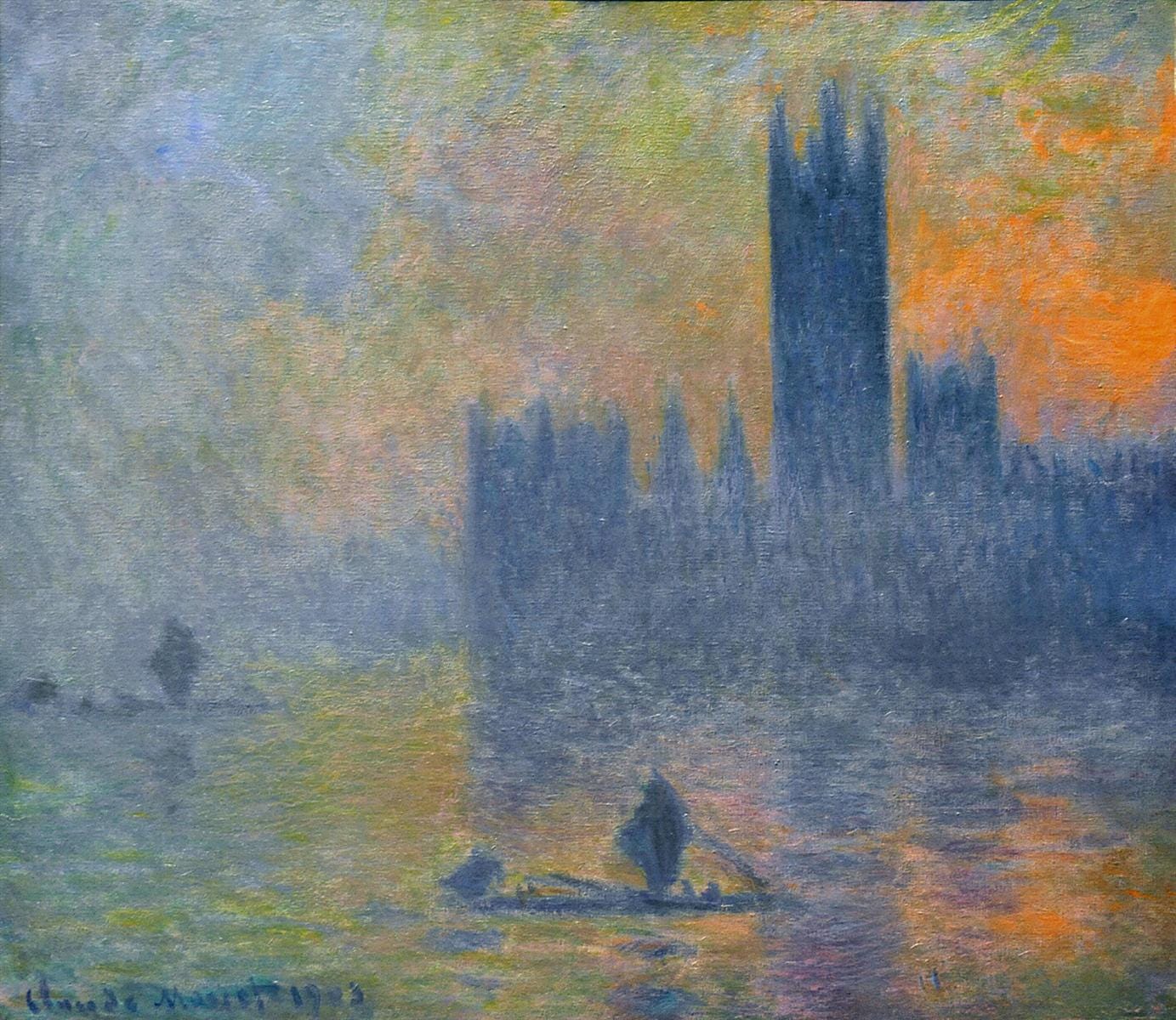
Milwaukee’s World Series win is a win for cheesehead art lovers: Thanks to a bet between the Milwaukee Art Museum and the Museum of Fine Arts in St. Petersburg Florida, the former will get Monet’s 1904 painting “Houses of Parliament, Effect of Fog, London” on loan from the latter.
“Many people are talking about putting your Monet where your mouth is,” Kim Sajet, director of the Milwaukee Art Museum, said before the game. And they did!